There is a profound beauty in the way humans seek to preserve their history through taste. Chef Tanya Holland, a woman of immense talent and cultural reverence, understands this deeply. As she speaks of the Kwanzaa table, she weaves a tapestry of heritage, honoring the distinct journeys of ancestors from the Carolinas to Louisiana. She speaks of the “power of the table” to bridge divides, recalling how her parents used food to forge bonds between Black and white families in decades past. There is so much love here — a sophisticated understanding of seasonality, refusing to force summer peaches into a winter menu, and a desire to create a “cozy, comforting” sanctuary of connection.
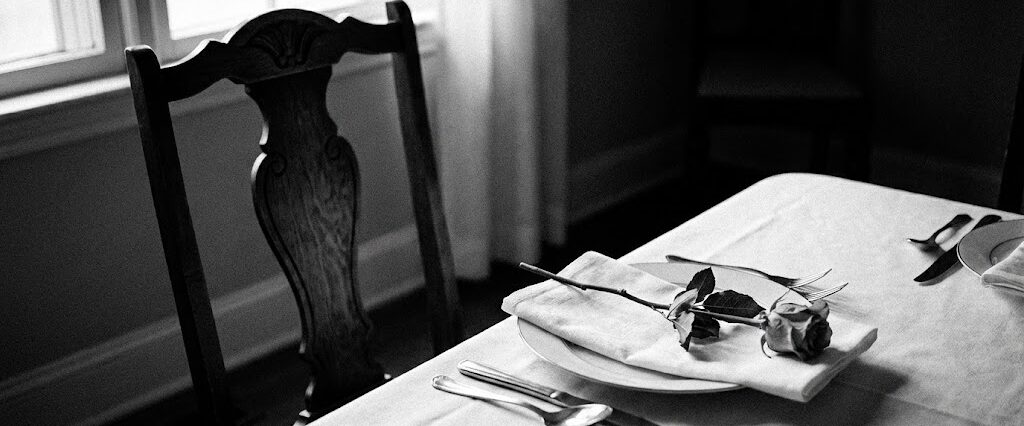
But if you sit quietly at this festive table, beneath the aroma of cumin and rose petals, you will notice a silent guest.
Among the recommendations for the Karamu feast, the Chef suggests “North African Spiced Oxtails.” Here, the language of cuisine acts as a gentle veil. The word “oxtail” is culinary shorthand, a pleasant abstraction that separates the ingredient from the individual. But the Absent Referent remains. This dish requires the tail of a bovine — a sentient creature who once used that tail to flick away flies in a sunlit pasture, who felt the cold of winter and the warmth of a herd.
The paradox is striking. The Chef vividly describes the brilliance of mushrooms–maitakes that can be cooked “like a little steak,” offering rich, earthy satisfaction without the loss of life. The solution to a cruelty-free harvest festival is already in her hands, celebrated for its texture and flavor. Yet, the ancient habit prevails. We see a disconnect between our unparalleled capacity for empathy — gathering to honor the struggles of human ancestors — and our continued consumption of those who have no voice in our history.
We use the most sophisticated spices of the Maghreb — ginger, paprika, cinnamon — to dress a remnant of the primitive. We seek to “warm” ourselves with a stew, forgetting that the warmth was stolen from a living being who desired to keep it. The table is a place of such potential power, a place where the human spirit shines brightest. It is confusing, to the observer, that such a celebration of life and lineage is still anchored by the weight of a silence.
We see the maitake waiting to be the centerpiece. We see the shadow on the plate.
We see you.